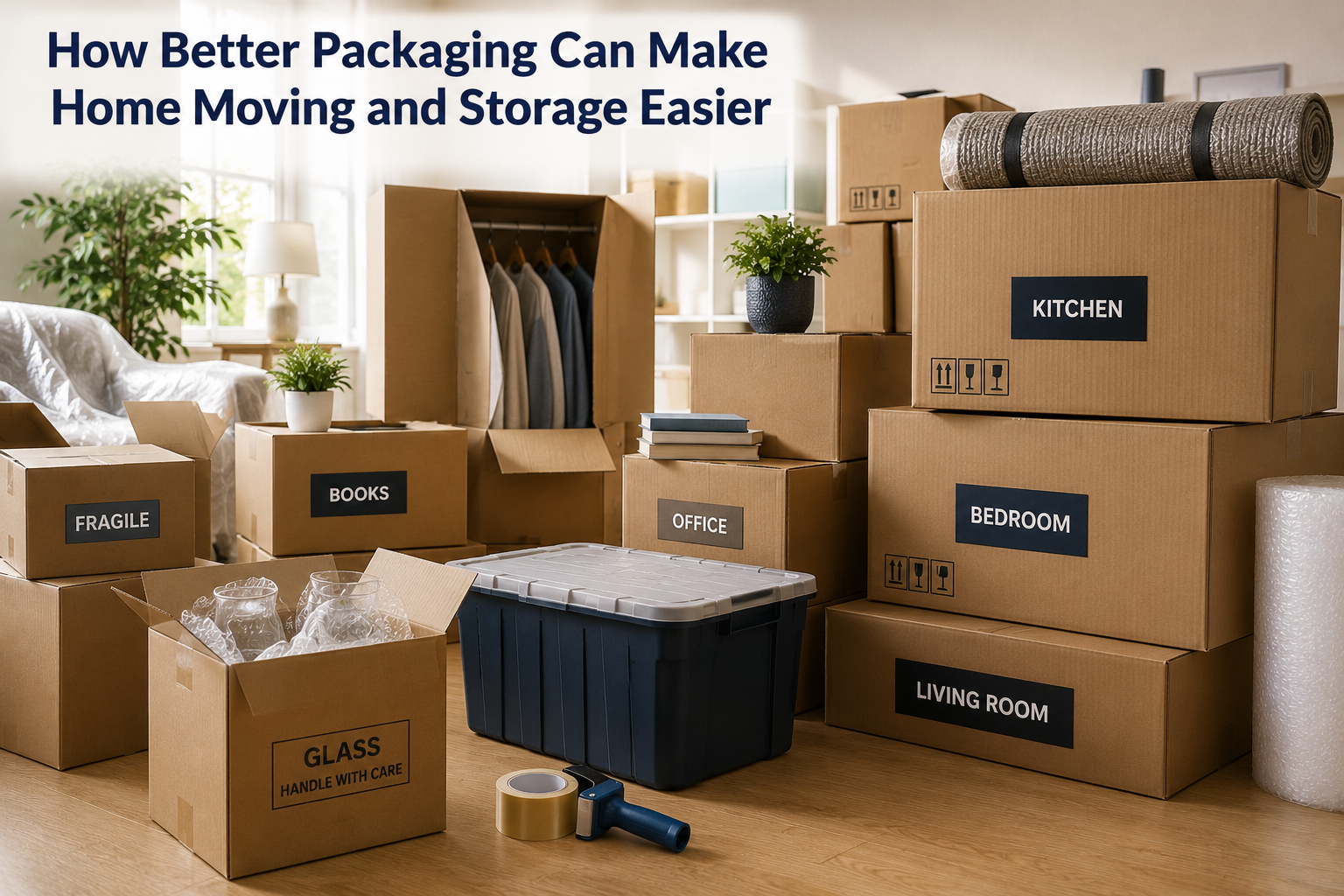
Every homeowner reaches a point where boxes become part of daily life. Maybe it’s a move across town, a garage that’s finally getting organized, or a closet that hasn’t been sorted since last winter. In all these situations, the boxes you choose end up mattering a lot more than most people expect.

Good packaging isn’t just about having something to put items in. It affects how well your belongings survive a move, how easy it is to find things later, and how much stress you feel while sorting through a house full of stuff. A little thought here saves hours of frustration down the road.
Why Packaging Matters During a Home Move
Moving day tends to expose every weakness in your packing choices. Boxes that seemed fine in the living room can buckle halfway to the moving truck. Thin cardboard that held up for a week of storage might not survive being stacked in a van for three hours.
The right home packaging solutions protect your belongings from three main risks: crushing, moisture, and shifting during transport. A sturdy box keeps its shape when stacked, which means the items inside stay put instead of sliding around and knocking against each other.
There’s also the unpacking side of things. Boxes that are labeled and sized sensibly make it much easier to figure out where everything goes once you’re in the new place. Nobody wants to open twelve identical unmarked boxes just to find the coffee maker.
Choosing the Right Boxes for Different Household Items
Not every box needs to do the same job. Matching the box to the item saves both space and hassle.
Clothing and linens: Medium boxes work best here since fabric is light. Wardrobe boxes with a hanging bar are worth the extra cost if you have a lot of hanging clothes, since they skip the folding step entirely.
Books: Small boxes are non-negotiable. Books are deceptively heavy, and a large box packed full of them becomes nearly impossible to lift safely.
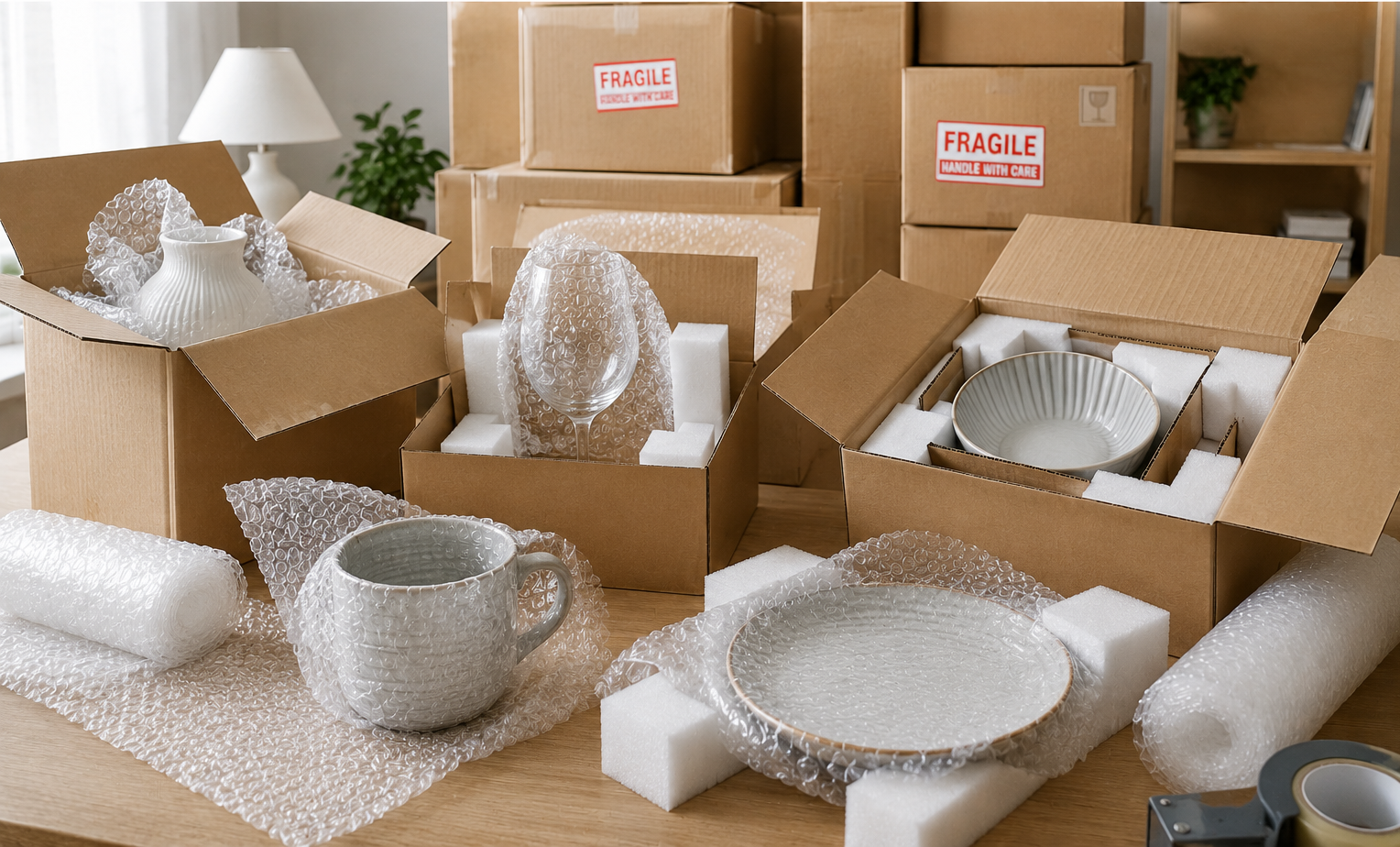
Kitchenware: Dishes and glassware need boxes with some rigidity and ideally dividers or extra padding. Cups nest well in smaller boxes, while pots and pans can go in slightly larger ones since they’re more durable.
Electronics: Original boxes are ideal when you still have them. If not, look for boxes with snug dimensions so the item doesn’t have room to shift, paired with padding on all sides.
Décor and fragile items: These deserve their own dedicated boxes rather than being mixed in with sturdier belongings. Extra cushioning around picture frames, vases, and ornaments makes a real difference.
Miscellaneous belongings: Every household ends up with a catch-all category. Medium boxes with clear labeling help keep this from turning into a mystery pile in the new garage.
How Stronger Boxes Help Protect Household Belongings
Box strength comes down to two things: the material itself and how well it’s constructed. Double-walled cardboard holds up far better under weight than standard single-wall boxes, which matters a lot when boxes are stacked three or four high in a truck or storage unit.
Handling also plays a role. Boxes with reinforced bottoms are less likely to give way when lifted from underneath, which is exactly the moment most damage happens. A box that looks fine sitting on a shelf can fail the instant someone picks it up by the sides.
Stacking stability matters just as much as raw strength. Boxes that are uniform in size stack more securely than a mismatched pile, reducing the chance of a collapse partway through loading.
Using Packaging to Improve Home Storage
Storage is a different challenge than moving, since boxes might sit untouched for months. Seasonal decorations, off-season clothing, and rarely used equipment all need boxes that can handle time, not just transport.
Attics and garages tend to have temperature swings and dust, so boxes stored there benefit from tighter lids or sealed closures. Basements bring moisture into the equation, which makes water-resistant packaging worth considering for anything sensitive, like documents or fabric.
Closets are usually more forgiving, but even here, uniform box sizes make a noticeable difference. Matching boxes stack cleanly on a shelf, while odd shapes waste space and tend to topple.
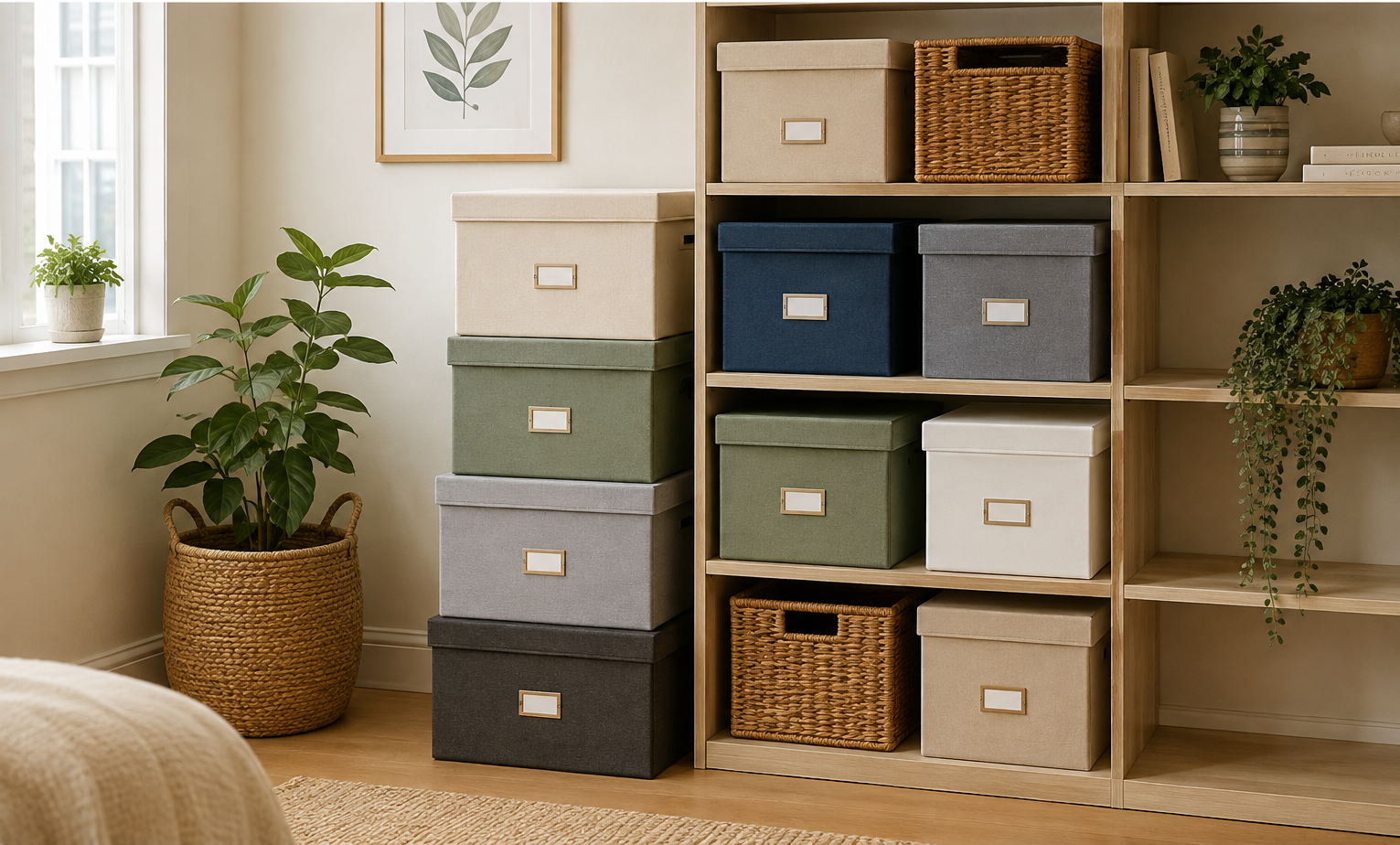
A few habits that make long-term storage more manageable:
- Group items by season or purpose before boxing them
- Keep frequently accessed boxes near the front or on lower shelves
- Use slightly smaller boxes for anything that will be moved often
- Reinforce the bottoms of boxes meant for long-term storage
How Better Packaging Makes Decluttering Easier
Decluttering usually stalls out because people run out of a clear system partway through. Having a few clearly labeled boxes on hand for donate, keep, and discard categories keeps the process moving instead of turning into a pile of “I’ll deal with this later.”
Boxes that are easy to carry also matter more than people expect. If a box is too heavy to lift comfortably once it’s full, it tends to just sit there instead of making its way to the donation center or the curb.
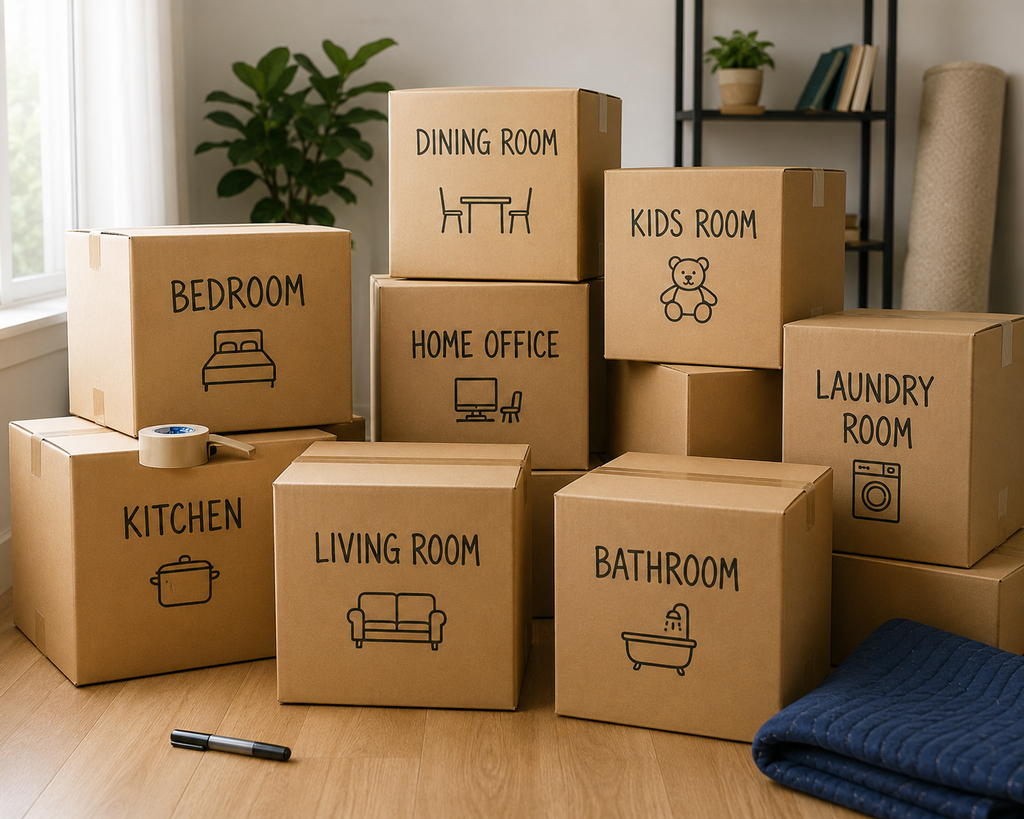
Labeling by room or category, rather than just writing “misc,” saves time later when you’re trying to remember what actually went where. A permanent marker and a bit of consistency go a long way here.
What to Look for When Choosing Packaging Boxes
A few practical factors separate a box that works well from one that causes problems later:
- Size: Big enough to be useful, small enough to stay liftable
- Material thickness: Heavier cardboard holds up better for repeated use or long storage
- Closure type: Tape, interlocking flaps, or lids all offer different levels of security
- Stackability: Uniform shapes make better use of shelf and floor space
- Protection: Padding, dividers, or double walls for anything fragile
- Reusability: Boxes that survive one move can often be flattened and reused for the next
Homeowners dealing with awkward-shaped items, valuable belongings, or frequent moves often find that standard retail boxes don’t quite fit the job. In these cases, it can be worth looking into custom packaging boxes that are sized and reinforced for the specific items being packed, rather than trying to force everything into whatever boxes happen to be available.
Making Moving and Storage More Organized
A little structure at the start of the process saves a lot of confusion later. Some approaches that consistently help:
- Label each box with both the room and a general contents list
- Keep an inventory list, even a simple one, for anything valuable or fragile
- Pack similar items together instead of mixing categories to fill space
- Set aside a small box of essentials that gets unpacked first
- Leave a bit of extra room in each box rather than overpacking to the point of strain
None of this requires elaborate systems or special tools. It’s mostly about being consistent from the first box to the last.
A Smarter Approach to Home Packaging
Standard boxes work fine for a lot of household needs, but there are moments when they fall short, awkward furniture pieces, oddly shaped décor, or valuable items that need more precise protection than a generic box can offer. For those situations, purpose-built packaging designed around the actual item tends to hold up better than trying to make a one-size-fits-all box work.
This is where a resource like BoxyPack becomes useful, since it focuses specifically on packaging built to match the item rather than forcing homeowners to improvise with whatever is available.
Conclusion
The boxes sitting in your garage or ordered for moving day aren’t just containers. They determine how well your belongings survive a move, how organized your storage stays over time, and how much stress you feel while sorting through a home full of things. Taking a bit of extra care in choosing the right size, strength, and type of packaging pays off well before you ever unpack the last box. Whether you’re relocating, storing seasonal items, or finally tackling that closet, thoughtful packaging turns a chaotic process into something a lot more manageable.